From EPDP Colony to Chittaranjan Park
CR Park began more than six decades ago as the EPDP Colony, short for East Pakistan Displaced Persons. Bengali families who had moved to Delhi after Partition, many of them working in government offices, campaigned for land of their own, and plots were allotted on rocky ground south of Kalkaji. The plan carried 2,147 plots, given out on long leases.
The colony was later renamed after Deshbandhu Chittaranjan Das, and the leases were converted to freehold over time. Additional pockets were laid out afterwards, including Pocket 40 (Navapalli), Pocket 52 and the M, N, O and P blocks, so the colony today is larger than the plan that started it.
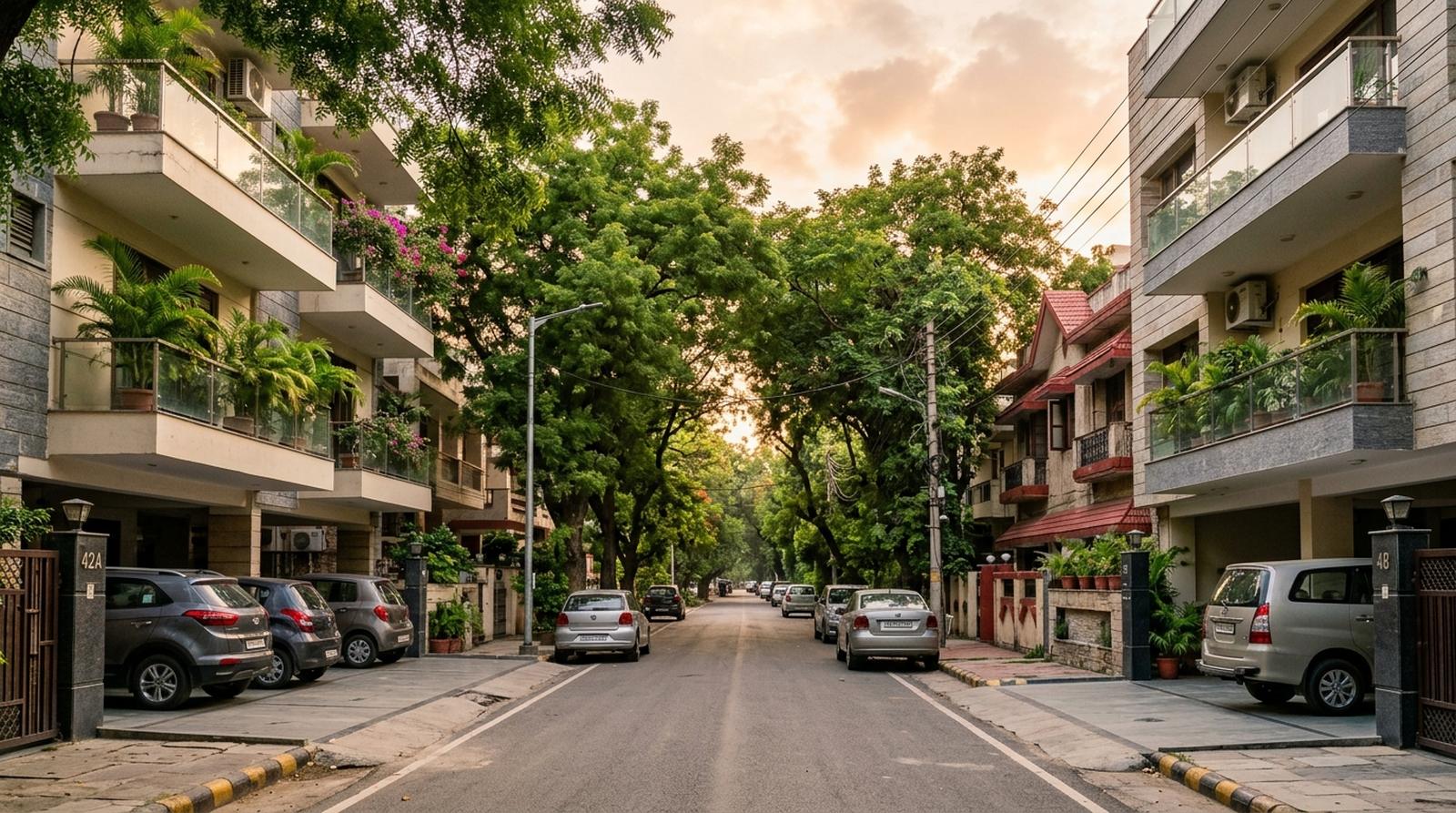
The temple complex on the hillock, the Kali Mandir with its Bengal-style terracotta shrines to Kali, Shiva and Radha-Krishna, was built about four decades ago and is the colony’s landmark. Around it, the original single-storey houses have mostly been rebuilt as stilt-plus-four floors, which is where nearly all new supply in CR Park comes from.
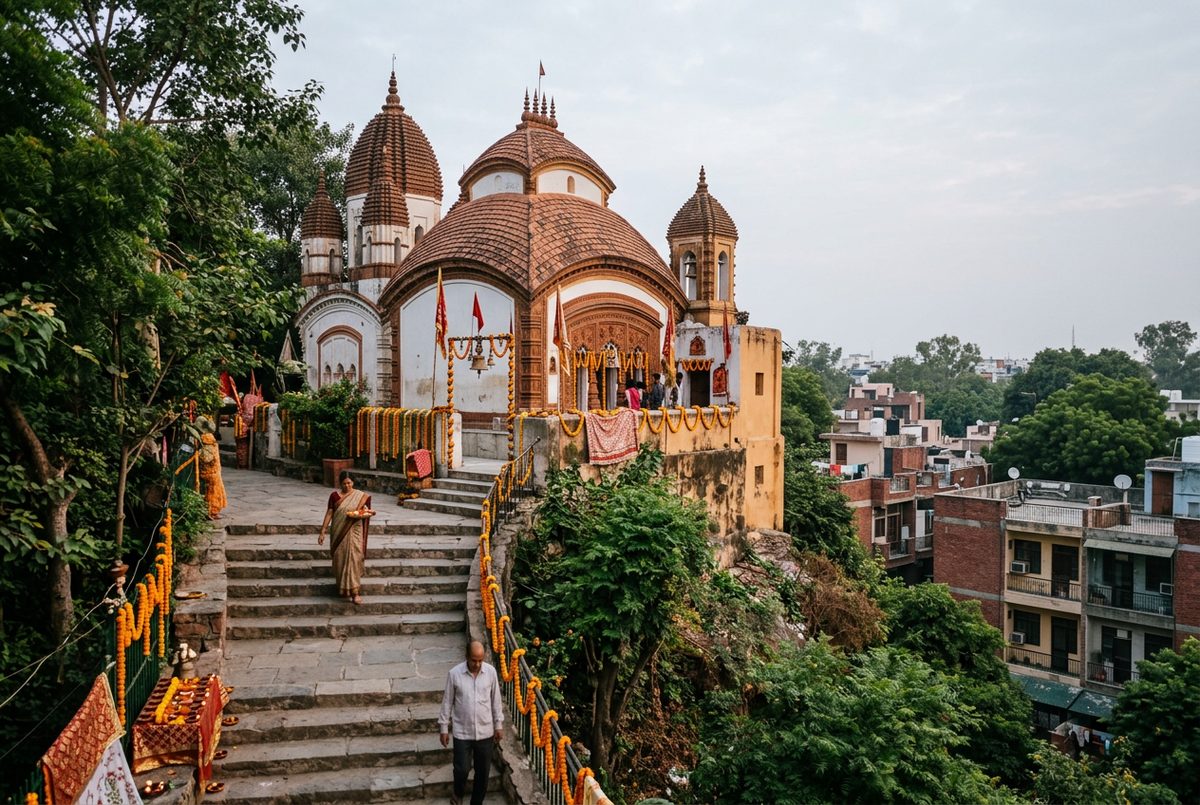
Near the Kali Mandir, property in Chittaranjan Park carries a view few colonies match. The temple on its hillock anchors the colony’s calendar, from daily aarti to Durga Puja.