
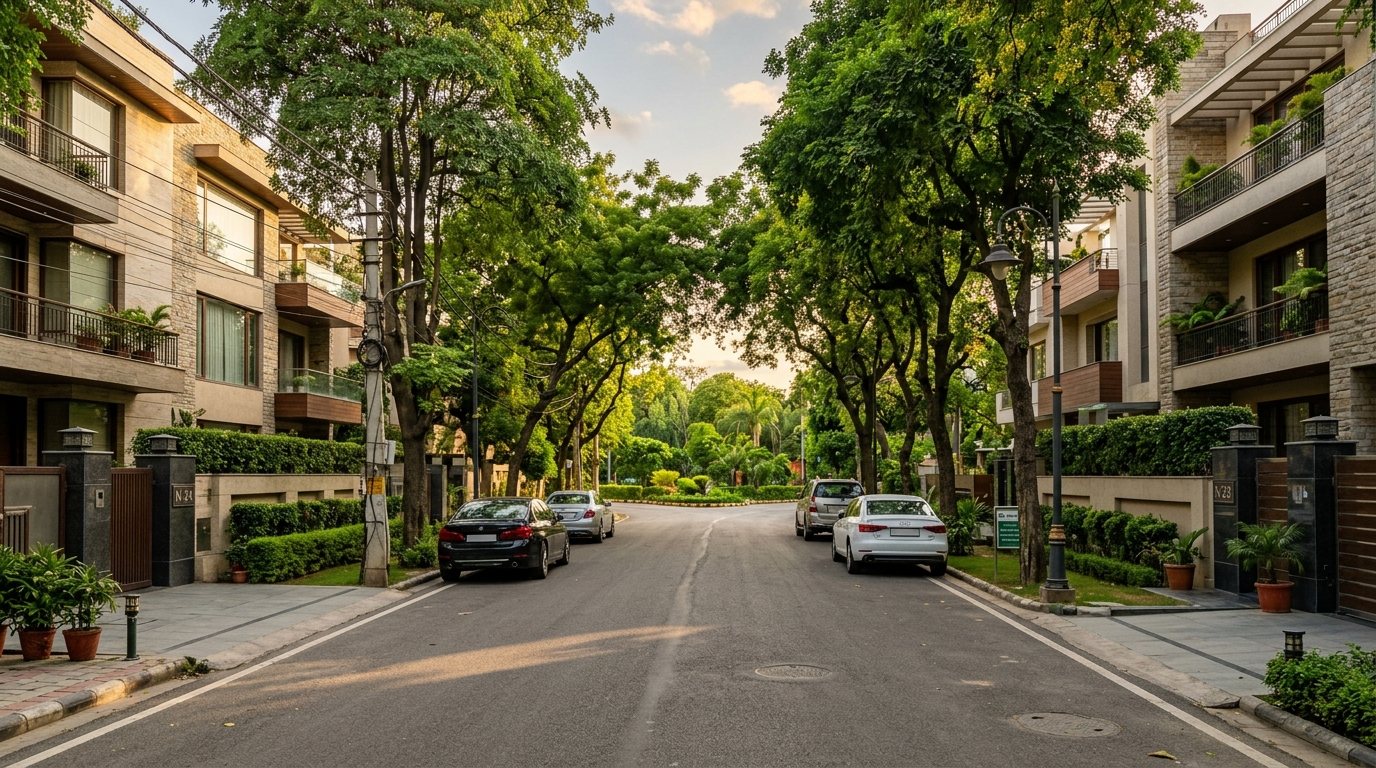
















Builder floor buying checklist — luxury builder floors on a tree-lined Greater Kailash street awaiting due diligence
SouthDelhiFloors · Due Diligence Desk

The Builder Floor Buying Checklist

The 21 checks we run before a client pays a rupee for a South Delhi floor — title, sanctioned plan, land share, RERA status, dues and deal execution. Print it, and don’t skip a line.

By the SouthDelhiFloors Research Desk Updated July 2026 13 min read
What should I check before buying a builder floor?

A complete builder floor buying checklist covers four fronts: title (an unbroken chain of registered deeds on freehold land, with the seller’s identity and capacity verified); the building (a sanctioned plan the construction actually matches, with the floor independently registrable and its land share defined); the money (no encumbrances, mortgages, tax or utility arrears, and payments fully in white with TDS deposited); and the deal (a tight agreement to sell, correct execution at the sub-registrar, and mutation after). Most South Delhi builder floors sit outside RERA’s thresholds — which is exactly why this diligence is on you.

A builder floor in South Delhi is a wonderful asset precisely because it is simple: one floor, one deed, a defined share of freehold land. However, that simplicity means there is no project escrow, no developer brand standing behind the paper, and usually no regulator either. The papers are the product. Over four decades our desk has reduced that reality to the 21 checks below — the same file our lawyers build before we call a deal clean.

21Checks across title, building, money and execution
30 yrsThe title-chain depth a thorough search covers
>500 sqmDelhi RERA registration threshold most floors sit under
0GPA deals a careful buyer should ever touch

Part one of the builder floor buying checklist: title and ownership

Trace the chain of title

Obtain every registered deed back at least 30 years — sale deeds, conveyances, gift or relinquishment deeds, probated wills. Each link must connect; a certified-copy search at the sub-registrar fills gaps the seller cannot.

Confirm freehold status

The plot must be freehold, or lawfully converted with the conveyance deed on file. Anything still leasehold is a different deal at a different price — see our guide to freehold vs leasehold property in Delhi.

Verify the seller’s identity and capacity

Match PAN and Aadhaar to the deed, confirm all co-owners are signing, and in inheritance cases demand the succession trail. A seller in a hurry to sign alone for the family is a red flag, not a convenience.

Read the land share in the deed — not the brochure

New floors typically convey a defined undivided share of the plot (commonly 22.5–25% per floor). The number in the registered deed is the one that exists.

Check the collaboration chain, if any

Where the floor comes from a landowner–builder deal, the registered collaboration agreement and the builder’s authority to sell that specific floor must be on file. Our explainer on the builder collaboration agreement in Delhi shows exactly what to demand.

Refuse GPA transactions outright

Since the Supreme Court’s Suraj Lamp ruling, a general power of attorney does not transfer ownership. If the “title” is a GPA, there is no title.

Part two: the building and its approvals

Pull the sanctioned building plan

The MCD-sanctioned plan is the building’s birth certificate. Compare it, sheet by sheet, with what stands.

Measure the deviations

Minor deviations are common in Delhi; major unauthorised construction — extra coverage, an unapproved floor, a converted stilt — invites sealing risk and kills bank funding.

Ask for the completion/occupancy paper trail

Where a completion certificate exists, take it. Where the colony practice differs, the sanctioned plan, water and electricity connections and tax assessment together evidence regular occupation.

Confirm what the floor includes

Terrace rights, stilt parking slots, servant quarter, basement share — each belongs to a floor only if the deed says so. “Everyone knows the top floor gets the terrace” is not a title document.

Check the RERA position honestly

Delhi RERA requires registration where the plot exceeds 500 sq metres or more than eight units are built. Most single-plot South Delhi floors fall outside it — meaning no regulator stands behind the builder’s promises. Where the project does cross the threshold, verify its registration on the Delhi RERA portal before booking.

Inspect construction quality with your own expert

Seepage history, structural members, plumbing and electrical standards — one site visit with an independent engineer costs a fraction of what it prevents.

Builder floor buying checklist in action — verifying the sanctioned plan and stamped title documents before purchase
The file is the floor: sanctioned plan, chain of title and dues certificates, checked line by line.

Part three: the money trail

Run an encumbrance search

Certified searches at the sub-registrar reveal registered mortgages, prior agreements and lis pendens. A running home loan needs the bank’s foreclosure letter and NOC woven into your payment mechanics.

Clear the civic ledger

Latest property-tax receipt, water and electricity dues, and the MCD record in the seller’s name — the same ledger your mutation will update after the deal.

Price against the market, duty against the higher value

Know the colony’s real trading band before you negotiate, and remember duty is computed on the higher of price or circle value — the arithmetic in our circle rate vs market rate guide.

Keep every rupee in white

Cash components destroy your cost base for future capital gains, invite penalty exposure, and mark the deal for life. Full-cheque is not just ethics; it is self-interest.

Deposit the TDS correctly

1% via Form 26QB on deals of ₹50 lakh or more — and the entirely different NRI-seller regime where it applies.

Let a bank’s diligence work for you

Even a part-funded purchase buys you the lender’s legal and technical scrutiny of the file — the cheapest second opinion in the market, as our builder-floor home loan guide explains.

Part four: executing the deal

Sign a tight agreement to sell

Timelines, payment schedule tied to document milestones, penalty and exit clauses, and the exact fixtures included. Ambiguity here becomes litigation later.

Register properly and promptly

E-stamp, book the SRO, execute with witnesses — the full sequence in our property registration process in Delhi guide.

Close the record with mutation and handover

Verify the MCD mutation, transfer utilities and RWA records, and take a signed inventory at possession. Only then is the checklist complete.

The three instant walk-aways

A GPA in place of a deed. A seller who resists the title search. A price that only works with a cash component. Forty years of files say the same thing: no discount survives a defective title.

We reject more floors than we sell. That is the entire service.
Mohit MinochaFounder, SouthDelhiFloors

Key takeaways

  • Run the builder floor buying checklist across four fronts: title, building, money, execution — 21 checks, no skips.
  • Demand a 30-year chain on freehold land, the sanctioned plan matched to the structure, and the land share written in the deed.
  • Most South Delhi floors sit outside RERA (≤500 sqm plots, ≤8 units) — the diligence burden is entirely the buyer’s.
  • Never buy on a GPA, never pay in cash, never close over unpaid dues.
  • Finish the job: registration, then mutation, then handover inventory.

Frequently asked questions

What documents should I check before buying a builder floor in Delhi?

The complete chain of registered title deeds (30 years where possible), freehold or conversion papers, the MCD-sanctioned building plan, the registered collaboration agreement where applicable, the seller’s identity documents, an encumbrance search, current property-tax and utility receipts, and any lender NOC on an existing mortgage.

Does RERA apply to builder floors in Delhi?

Only when the project crosses the thresholds — a plot exceeding 500 sq metres, or more than eight units across all phases. Most single-plot South Delhi builder floors fall outside these limits, so no RERA registration exists and buyer-side due diligence carries the full weight.

What is a clear title for a builder floor?

An unbroken sequence of registered instruments vesting the specific floor and its undivided land share in the seller, on freehold land, free of encumbrances, with every co-owner and inheritance link accounted for. Anything the chain cannot explain, the price must — or you walk.

How do I verify the sanctioned plan of a building?

Obtain the MCD-sanctioned plan from the seller or through the municipal record and compare it against the actual construction — coverage, floors, stilt use and setbacks. Material deviations mean sealing risk and financing trouble; have an architect read it if in doubt.

What land share should a builder floor have?

New stilt-plus-four buildings commonly convey about 22.5–25% of the plot per floor, with basement and ground often sold together. The only number that matters is the one written in the registered sale deed.

Is it safe to buy property on a GPA in Delhi?

No. Following the Supreme Court’s Suraj Lamp judgment, a general power of attorney does not convey ownership; only a registered sale or conveyance deed does. GPA arrangements also fail at mutation and at resale.

Should I do a title search even if I’m paying cash without a loan?

Especially then. A lender’s legal team is a free layer of scrutiny that all-cash buyers forgo — so an all-cash purchase needs an independent lawyer’s search and opinion all the more.

What dues can transfer with a property?

Property-tax arrears, water and electricity dues and society/RWA charges attach to the property in practice and become your headache after possession. Collect current no-dues receipts and adjust anything pending in the closing statement.

Who pays for the due diligence?

The buyer, and gladly: a full search-and-opinion costs a fraction of one percent of a South Delhi deal. Sellers with clean files welcome it; resistance to scrutiny is itself a finding.

What comes after the checklist clears?

Execution: a tight agreement to sell, e-stamping and registration at the sub-registrar, TDS deposit, then mutation, utility transfers and a signed possession inventory. The deal is complete when the record matches the keys.

Want the 21 checks run for you?

Every floor we offer has already been through this file — title searched, plan matched, dues cleared. Clean deals only, full-cheque, fully documented.

SouthDelhiFloors is a property advisory, not a law firm. Title opinions come from empanelled counsel.

Checklist reflects Delhi practice as of July 2026. RERA thresholds per the Real Estate (Regulation and Development) Act and Delhi RERA’s orders — verify a project’s status at rera.delhi.gov.in. Legal positions can change; obtain a professional opinion for your specific transaction.

Share this:

Like this:

Like Loading…

SOUTH DELHI FLOORS

Clean Deals Only · Since 1984

Second-generation consultants for South Delhi’s finest builder floors, farmhouses and independent homes. Four decades of clean, verified transactions.

+91 99990 04511

Enquire Now

Tell us what you are looking for and a senior consultant will get back to you.

    Your Name

    Telephone Number

    Your Email (required)

    Enter Your Message

    © 2026 SouthDelhiFloors LLP · All Rights ReservedClean Deals Only · Since 1984

    Compare Properties

    Compare
    You can only compare 4 properties, any new property added will replace the first one from the comparison.
    Property in South Delhi : Buy Sell Properties, Flats, Homes, Apartments Call SouthDelhiFloors
    Contact
    close slider

      Your Name

      Telephone Number

      Your Email (required)

      Enter Your Message

      error: Content is protected !! Please Don\\\\\\\'t Try To Copy