|
Listen SouthDelhiFloors Podcast
Getting your Trinity Audio player ready...
|
Builder Floors in South Delhi: The Complete 2026 Buying Guide
By the SouthDelhiFloors Research Desk · Mohit Minocha, Founder, SouthDelhiFloors
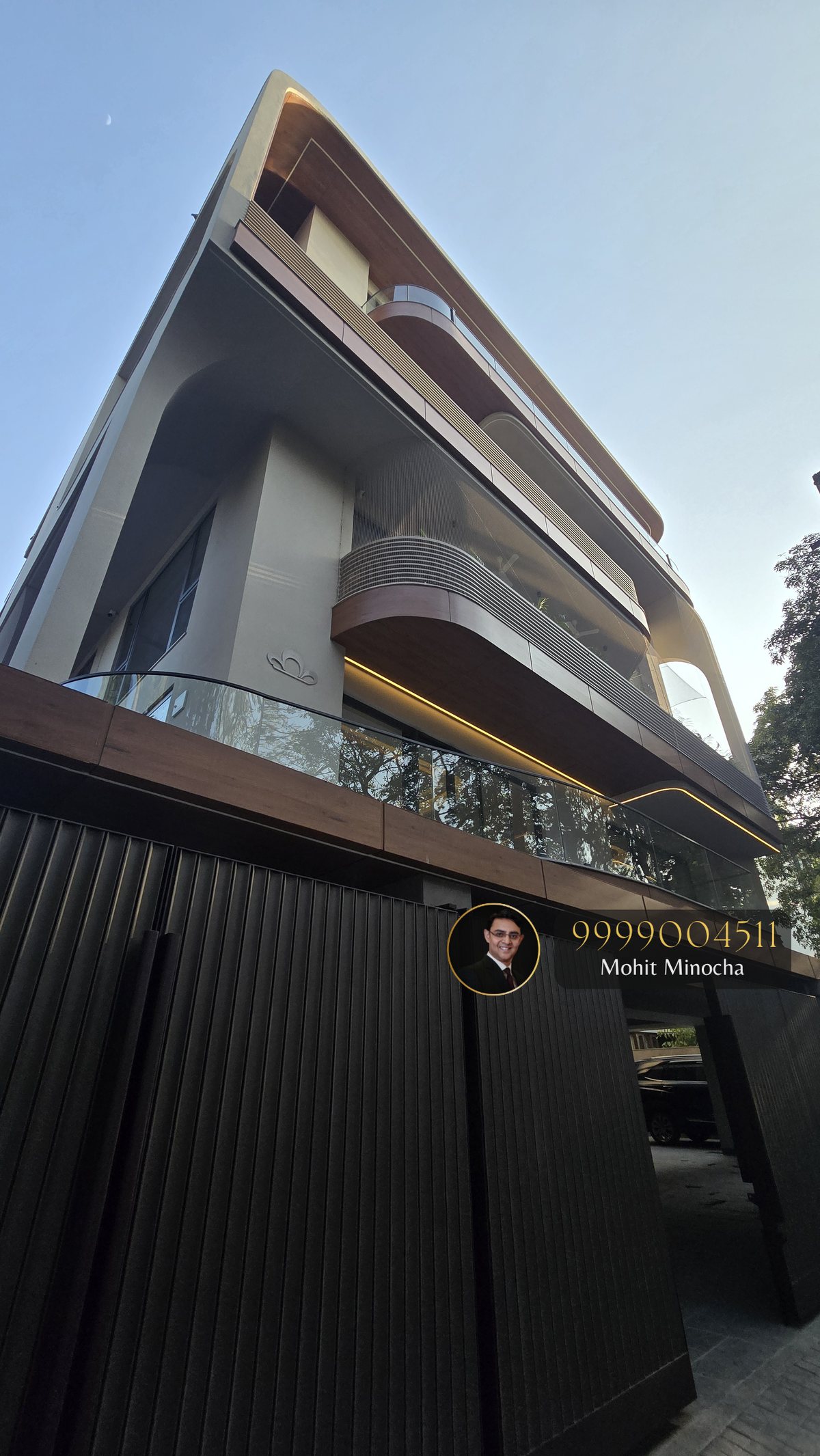
A builder floor in South Delhi is an independent apartment occupying one full floor of a low-rise building, usually stilt parking plus four floors, built on a freehold residential plot. The buyer owns the floor along with a proportionate share of the land, which is why builder floors appreciate closer to land values than to flat values.
A builder floor in South Delhi is an independent apartment occupying one full floor of a low-rise building,
usually stilt parking plus four floors, built on a freehold residential plot. The buyer owns the floor along
with a proportionate share of the land, which is why builder floors appreciate closer to land values than
to flat values.
IN THIS ARTICLE
01 What Exactly Is a Builder Floor?
02 Why South Delhi Runs on Builder Floors
03 What Builder Floors Cost in 2026
04 Construction Quality: What to Actually Inspect
05 The Legal Checklist
06 The Money Side
07 Mistakes We See Every Season
08 Frequently Asked Questions
09 Key Takeaways
Builder floors are the quiet engine of South Delhi real estate. High-rise towers get the advertising
budgets, but when a business family in Delhi upgrades its home, the purchase is usually a floor in
Greater Kailash, Defence Colony, Panchsheel Park or Vasant Vihar. In the first quarter of 2026, prices of
luxury builder floors in South Delhi’s plotted colonies rose by as much as 32% year on year even while
the wider NCR market cooled — the sharpest run this segment has seen in over a decade.
That kind of appreciation attracts money, and money attracts shortcuts. We have spent four decades
closing floor transactions across South Delhi from our base in Defence Colony, and the difference
between a good purchase and an expensive mistake almost always comes down to things that never
appear in the brochure: the land share written into the sale deed, the sanctioned plan, the terrace
rights, the quality of the RCC frame behind the Italian marble. This guide covers all of it — what a
builder floor actually is, what it costs in 2026, and exactly what to check before you sign.
What Exactly Is a Builder Floor?
A builder floor is an independent apartment that occupies one entire floor of a low-rise residential
building constructed on a freehold plot. Delhi’s building bye-laws currently permit a stilt (for parking)
plus four floors on most residential plots, with an overall height cap of 17.5 metres where stilt parking
is provided. So a typical new building in GK-1 or Defence Colony has four saleable floors above a stilt,
sometimes with a basement below.
The part most first-time buyers miss: when you buy a builder floor, your sale deed conveys the floor
plus a proportionate undivided share of the plot itself. On a new four-floor building, that share is not an even quarter.
A first, second or third floor carries 22.5% of the plot, while the basement-plus-ground unit carries 32.5% (10% basement plus 22.5% ground). Many older floors, however, still convey a flat 25% per floor, so read the share off the deed rather than assuming it. This is the structural difference between a builder floor and a flat in a group housing
society, and it drives almost everything else — pricing, appreciation, redevelopment value and the
legal checks that matter.
SouthDelhiFloors insight: In a colony like GK, land alone trades at roughly ₹10 lakh per square yard in 2026. On a 300 square yard plot, a 22.5% land share is worth around ₹6.75 crore before you count the construction at all (an older floor on a 25% share would be worth around 7.5 crore).
When a floor appreciates, it is mostly the land share doing the work.
How the Building Is Typically Structured
● Basement: Legally usable for parking, storage and services; habitable use requires specific
sanction. Often sold bundled with the ground floor as a duplex.
● Stilt: Open parking level. Each floor is usually allotted one or two designated slots — these must be
named in the deed.
● Ground to second floor: Independent floors, usually 3 or 4 bedrooms each depending on plot size.
● Top floor: Commands a premium when sold with exclusive terrace rights — effectively a penthouse
with a private terrace garden.
Why South Delhi Runs on Builder Floors
South Delhi has no large vacant land parcels left. The colonies were laid out between the 1950s and
1970s as plotted developments, and the original single-family kothis are now 40 to 60 years old.
Redevelopment happens one plot at a time: an old house comes down, a stilt-plus-four building goes
up, and four families get brand-new homes on the same address. This is the only meaningful source of
new luxury supply inside South Delhi, which is precisely why it is scarce and why it holds value.
The demand side is equally structural. Buyers here — business families, senior professionals, doctors
with practices nearby, NRIs returning to the family neighbourhood — want low-density living, a private
entrance, their own lift and no 400-family tower committee. A builder floor delivers the privacy of a
bungalow at a quarter of the land cost. The 2026 price surge also had an institutional layer: alternative
investment funds have started financing floor redevelopment in colonies such as Anand Niketan, a first
for this market.
What Builder Floors Cost in 2026
Prices below are indicative mid-2026 levels for new or near-new construction, drawn from current
transactions and the Q1 2026 market data. Actual pricing swings with plot size, block, park-facing
position, floor level and finish.
| Colony | Circle Rate Category | New floor starts at | Land (per sq yd) |
| Vasant Vihar | A | ₹18 Cr (4 BHK, 400 sq yd) | ₹11–13 L |
| Anand Niketan / Shanti Niketan / Westend | A | ₹9 Cr (3 BHK, 200 sq yd) to ₹25 Cr (4 BHK, 500 sq yd) | ₹11–14 L |
| Panchsheel Park | A | ₹18 Cr (4 BHK, 500 sq yd) | ₹9–11 L |
| Greater Kailash 1 & 2 | B | ₹6.5 Cr (3 BHK, 200 sq yd); ₹9 Cr (4 BHK, 300 sq yd) | ₹8–10 L |
| Defence Colony | B | ₹9.5 Cr (3 BHK, 217 sq yd); ₹15 Cr (325 sq yd) | ₹13–15 L |
| Hauz Khas Enclave | B | ₹20 Cr (4 BHK, 500 sq yd) | — |
| Gulmohar Park / Neeti Bagh / Anand Lok | B | ₹9 Cr (3 BHK, 200 sq yd) to ₹18 Cr (400 sq yd) | ₹12–16 L |
| Safdarjung Development Area (SDA) | B | ₹10 Cr (3 BHK, 250 sq yd) | — |
Two patterns worth registering.
First, Category A addresses cost more for the same plot size (a new 400 sq yd floor starts around ₹18 crore in Vasant Vihar against about ₹14 crore in GK-II) but appreciated more slowly in the last cycle — Q1 2026 data showed Category B colonies growing 23–32%
year on year against 14–22% for Category A.
Second, the market prices land, not just construction: a 500 square yard plot floor in GK will out-appreciate a better-finished 200 square yard floor nearby, because the land share is larger.
New Build, Resale or Under Construction?
● New build (ready): Cleanest option. You inspect the finished product, get fresh construction and a
full warranty relationship with the builder. You pay the highest rate for it.
● Resale (5–15 years old): Typically 15–30% cheaper per square foot than new. The land share is
identical, so the discount is really on the structure and fittings. A sound resale floor in a good block
is often the best value in this market.
● Under construction: Milestone-linked payments and a modest price advantage, against
completion risk. Most single-plot redevelopments fall below the size thresholds that trigger RERA
registration in Delhi, so your protection is the builder’s track record and your agreement — not a
regulator.
The Collaboration Angle
A large share of new floors reach the market through collaboration: the plot owner hands the property
to a builder, who constructs the building and keeps one or two floors to sell as his fee, while the owner
retains the rest.
As a buyer, always establish whether your counterparty is the builder or the original
owner, confirm the registered collaboration agreement, and make sure both sign or consent to your
sale deed where required. Title disputes in this segment almost always trace back to a poorly drafted
collaboration agreement.
Construction Quality: What to Actually Inspect
Marble and modular kitchens are the easiest things to get right and the least important. Check the things that are expensive to fix:
● Structure: Ask for the structural drawings and the engineer’s certificate. Delhi is in seismic Zone IV; a properly designed RCC frame matters more than any finish.
● Seepage: Inspect bathroom ceilings of the floor below, terrace waterproofing and external walls after the first monsoon if possible. Seepage is the single most common complaint in one- to three-year-old floors.
● Lift: Brand, capacity and whether it serves the basement and terrace. A cramped three-passenger lift devalues a top floor.
● Power backup: Confirm the genset capacity in KVA allocated to your floor, and where it sits.
● Parking: Physically count the stilt slots. Four floors with six cars and four slots is a permanent quarrel.
● Services: Separate water tanks and meters per floor, quality of electrical fittings and plumbing brands actually installed versus the specification sheet.
The Legal Checklist
This is where we insist clients slow down. Every point below has, at some time, cost a buyer we know real money.
● Title chain: Trace ownership documents for at least 30 years, including any prior collaboration agreements, gift deeds and mutation entries.
● Sanctioned building plan: Compare the approved plan with what stands. Deviations — an extra room on the terrace, covered stilt — are your problem after registration.
● Land share: The exact undivided share of the plot must be written into the sale deed, not implied.
● Terrace and roof rights: If you are buying the top floor with terrace, the deed must say so explicitly. If you are buying a lower floor, understand what has been given away above you.
● Parking: Specific stilt slots identified in the deed.
● Dues and mutation: MCD property tax clearances, no-dues from the RWA, and mutation of the property in municipal records after purchase.
● Completion: Completion or regularisation status of the building.
● Avoid GPA-only deals: Buy only through a registered sale deed. Power-of-attorney transactions do not convey title.
The Money Side
On a ₹12 crore floor in GK registered in a male buyer’s name, budget roughly ₹72 lakh stamp duty (6%), ₹12 lakh MCD transfer duty (1%), ₹12 lakh registration fee (1%), and the buyer must deduct 1% TDS on the consideration and deposit it against the seller’s PAN. Registering in a female family member’s name brings stamp duty down to 4% — a legitimate ₹24 lakh saving on this ticket size. Duty is charged on the higher of the transaction value or the circle-rate value; in South Delhi the market value is almost always the higher figure. Banks typically fund 65–75% of a floor purchase at this ticket size, so plan equity accordingly.
Mistakes We See Every Season
● Comparing floors on quoted per-square-foot rates without checking whether the area quoted is carpet, built-up or super built-up.
● Paying a top-floor premium without exclusive terrace rights in the deed.
● Assuming the basement is legally habitable because it has a bathroom.
● Skipping the structural and seepage inspection on collaboration floors because the drawing room looks spectacular.
● Agreeing to a significant cash component. It caps your resale value, limits your loan, and creates tax exposure on both sides.
● Buying the cheapest floor in a great colony instead of a fair-priced floor in a great block. Block-level location inside a colony moves value more than most buyers expect.
Frequently Asked Questions
A builder floor occupies an entire storey of a low-rise building on a freehold plot and comes with a
proportionate share of the land. An apartment is one of many units in a group housing tower where
land is held collectively by the society. The land share is why floors track land prices.
Delhi’s bye-laws currently allow stilt parking plus four floors on most residential plots, within a height
cap of 17.5 metres where a stilt is provided. Always verify the sanctioned plan for the specific plot.
New construction in GK-1 and GK-2 starts around ₹9 crore for a 4 BHK on a 300 sq yd plot, and
a typical 4 BHK floor runs between roughly ₹9 crore and ₹16 crore depending on plot size, block
and floor level.
No. The land share — the main driver of appreciation — is identical. Resale floors trade 15–30% below
new builds mainly on the age of the structure and fittings, which often makes them the better value if
the construction is sound.
Almost all new construction in premium colonies includes a lift serving every floor, In resale floors older than about 15 years, verify lift, and factor retrofit costs if absent.
Ground floors suit families with elderly members and usually carry lawn or front-court use; top floors
with terrace rights command a premium for privacy and outdoor space; middle floors are typically
priced lowest. There is no single right answer — it is a lifestyle call with a price attached.
Most single-plot redevelopments fall below the project-size thresholds that require RERA registration,
so the usual RERA protections do not apply. Your safeguards are title diligence, a well-drafted
agreement and the builder’s track record.
A floor built under an owner–builder collaboration, where the builder constructs the building and
retains one or more floors as consideration. These are perfectly good purchases provided the
collaboration agreement is registered and the deed is signed by the correct party.
Yes. All major banks and housing finance companies lend against builder floors in South Delhi,
generally funding 65–75% of the value at luxury ticket sizes, subject to clean title and an approved
plan.
Roughly 6–8% extra for government charges: stamp duty of 4–6% depending on whose name the property is registered in,
1% MCD transfer duty and 1% registration fee, plus legal fees and brokerage on top. Interiors, if you plan changes, are over and above.
Key Takeaways
● A builder floor is land ownership in disguise — the undivided plot share in your deed is what appreciates.
● 2026 is a seller’s market: Q1 prices rose up to 32%, with Category B colonies like GK and Defence Colony outpacing Category A.
● New 4 BHK floors start around ₹9 crore on 300 sq yd in GK and ₹18 crore on 400 sq yd in Vasant Vihar.
● The deed must spell out land share, terrace rights and parking slots. If it is not written, you do not own it.
● Inspect structure, seepage, lift and backup before finish quality; buy through registered sale deeds only.
Explore More on SouthDelhiFloors
- Property rates in South Delhi: floor prices by colony
- Areas in South Delhi: every colony, mapped
- Best Residential Areas in South Delhi
- Property in Defence Colony: Prices, Blocks and Buying Guide
- Property in Vasant Vihar: Prices, Blocks and Buying Guide
- Greater Kailash 1 Property Guide
- Property in Greater Kailash 2: Prices, Blocks and Buying Guide
- Builder Floor vs Apartment: Which to Buy?
- Circle Rate vs Market Rate in Delhi
- Stamp Duty and Registration Charges in Delhi
- NRI Guide to Buying Property in South Delhi
- Farmhouses in Delhi: Belts, Prices & the Legal Reality
TALK TO SOUTHDELHIFLOORS
Shortlist three to five floors that match your brief, walk them with us in a single afternoon, and get an honest read on price and paperwork before you commit.
Call / WhatsApp: +91 99990 04511 · Email: contact@southdelhifloors.com · Web: SouthDelhiFloors.com
Defence Colony–based consultants · Four decades in South Delhi real estate
Important Links :
● Basement and Ground Duplexes