Freehold vs leasehold property in Delhi — what is the difference?
Freehold means you own the property and the land beneath it absolutely, forever, with the full right to sell, gift, mortgage or rebuild without any authority’s permission. Leasehold means the land belongs to a government body — usually the DDA or the L&DO — and you hold it on a long lease, pay ground rent, and need the lessor’s permission for transfers and construction. In Delhi, freehold is unambiguously superior: it commands a higher price, sells faster, and banks lend against it more readily. Most leasehold residential property in Delhi can be converted to freehold by paying the DDA’s one-time conversion charges and executing a conveyance deed.
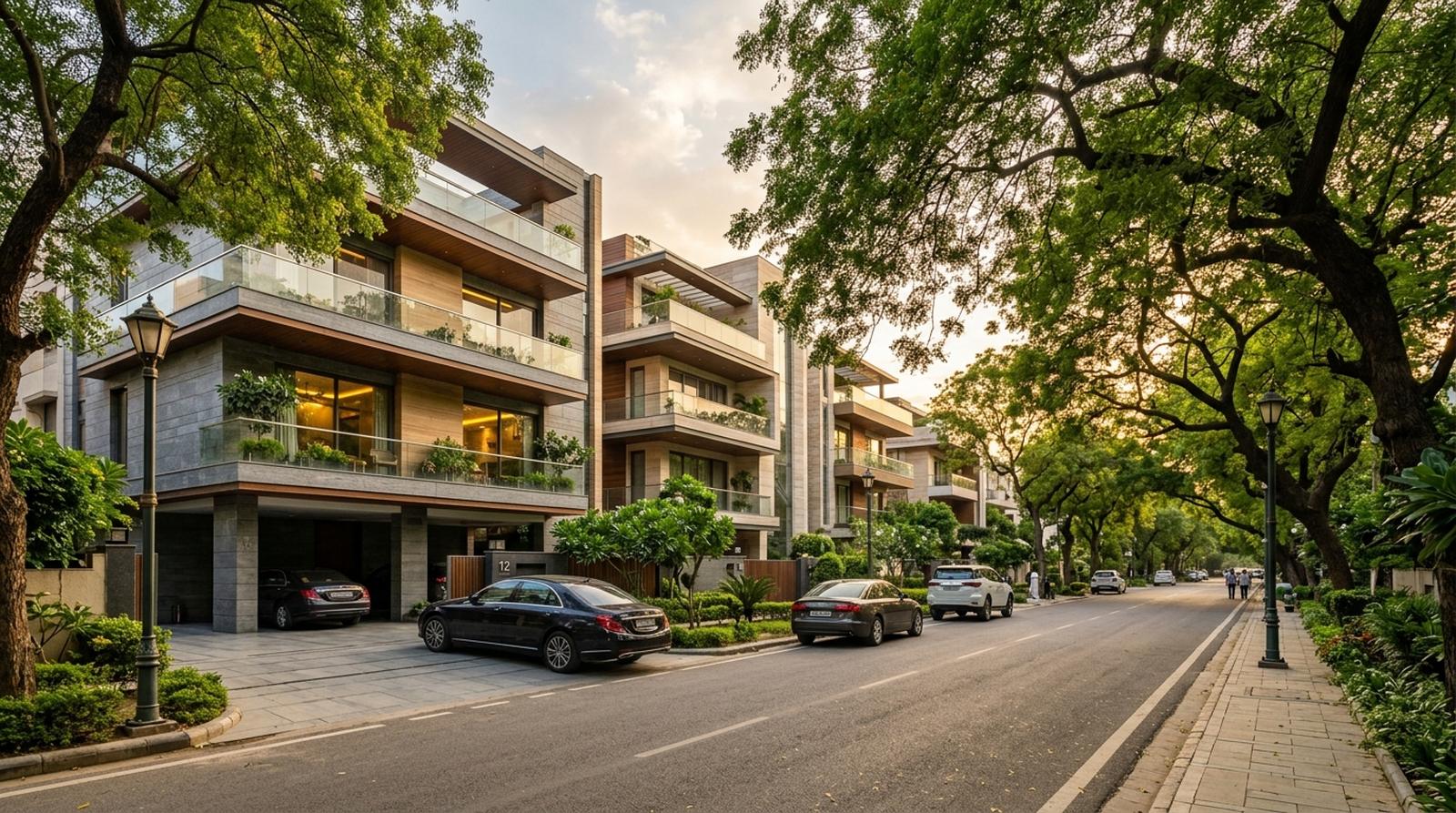
Nowhere does this distinction matter more than in South Delhi. The colonies we work in every day — Defence Colony, Greater Kailash, Panchsheel Park, Vasant Vihar — are overwhelmingly freehold today, which is precisely why the builder-floor model works here: a builder can buy a plot outright, construct, and convey each floor with a defined land share. That entire chain rests on the land being freehold.
Even so, leasehold has not vanished. Older DDA flats, some cooperative society land, pockets of institutional leases and the L&DO estates of central Delhi still run on leasehold — and every year we see buyers discover this two days before a registry. This guide explains freehold vs leasehold property in Delhi from a buyer’s chair, and then walks through the conversion, step by step.
100%Ownership of land + structure under freehold, in perpetuity
DDA / L&DOThe usual lessors behind leasehold land in Delhi
5 yrsMaximum instalment window for DDA conversion charges (12% interest)
4–6%Stamp duty on the conveyance deed that completes conversion