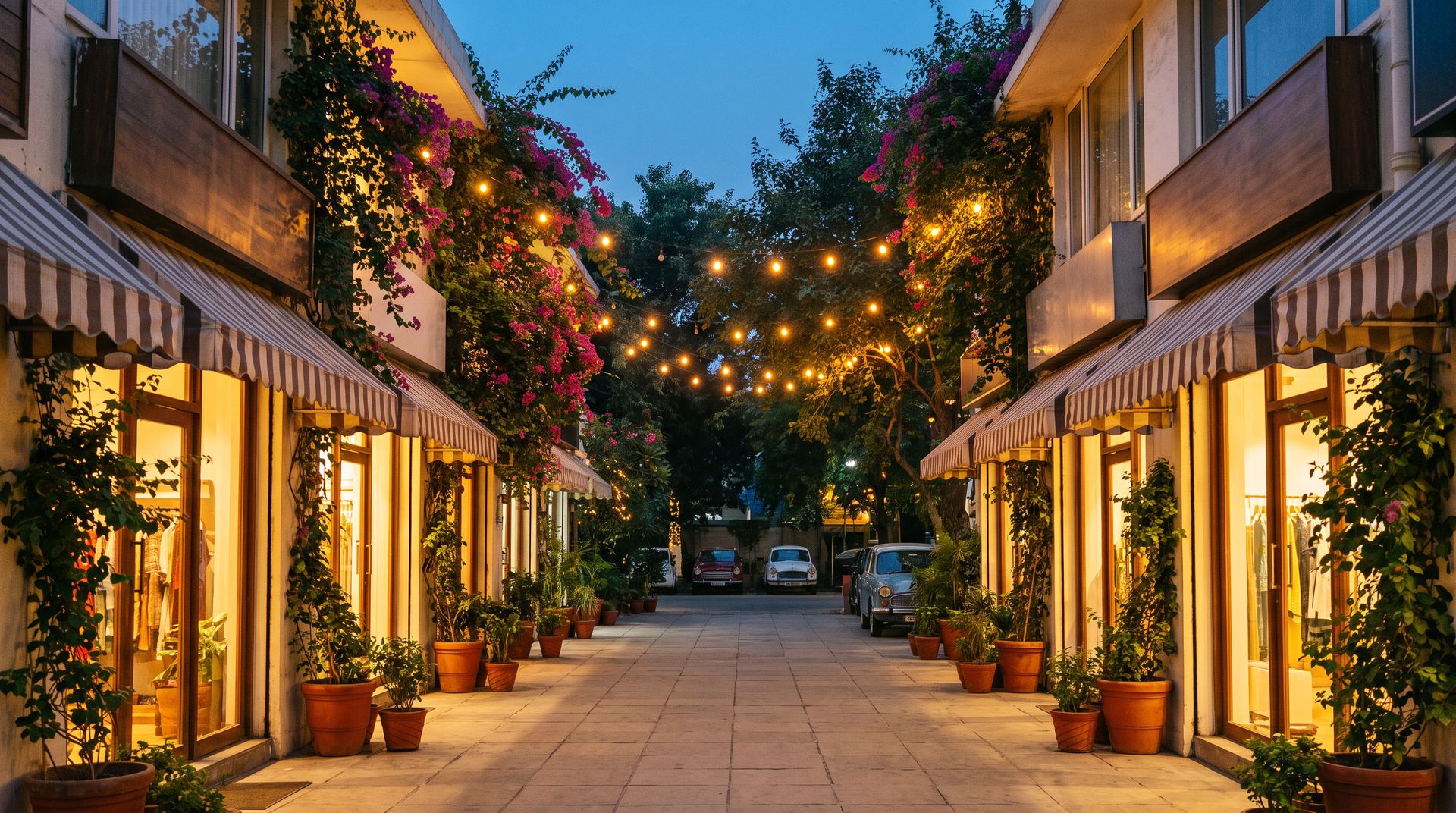
Four kinds of market, and why the difference matters when you buy
Lumping these together as “markets” hides the thing a buyer needs to know. They behave very differently as neighbours.
1. Premium high streets
Khan Market, Meharchand, Santushti. Small, expensive, destination retail drawing people from across the city. Khan Market is the extreme case: Cushman & Wakefield’s Main Streets Across the World ranks it India’s most expensive high street and 24th globally, at about $223 per sq ft a year, with monthly rents of ₹1,700–1,800 per sq ft in April–June 2026. For residents the appeal is obvious and so is the cost: three lanes of shops generate more cars than they can park. Meharchand in Lodhi Colony offers much of the same at a calmer pace, and Santushti in Chanakyapuri is a walled garden complex that behaves like no other market in the city.
2. Neighbourhood high streets
Defence Colony, GK-1 M Block, GK-2 M Block, Kailash Colony, Green Park, Basant Lok, Anand Niketan, SDA. These are what people mean by “the market” in daily speech: a chemist, a bakery, a bank, a clinic, a few restaurants. Living four minutes’ walk from one is a genuine amenity and shows up in what buyers will pay. Living directly across from one is a different proposition — our guide to corner, park-facing and main-road floors covers how to price that trade-off.
3. Specialist destinations
Sarojini Nagar, Lajpat Nagar, CR Park, Shahpur Jat, Hauz Khas Village, INA and Dilli Haat. Each pulls shoppers from across Delhi-NCR for one particular thing, which means footfall far beyond the local population. The upside is that these are the markets outsiders know your colony by. The downside is weekend congestion that reaches several streets deep.
4. The mall cluster
Saket: Select Citywalk, DLF Place, MGF. Not a market in the street sense at all, but the reason a large part of south-eastern South Delhi no longer drives to Connaught Place. Parking is internal, which keeps the surrounding streets calmer than a street market of the same pull would.