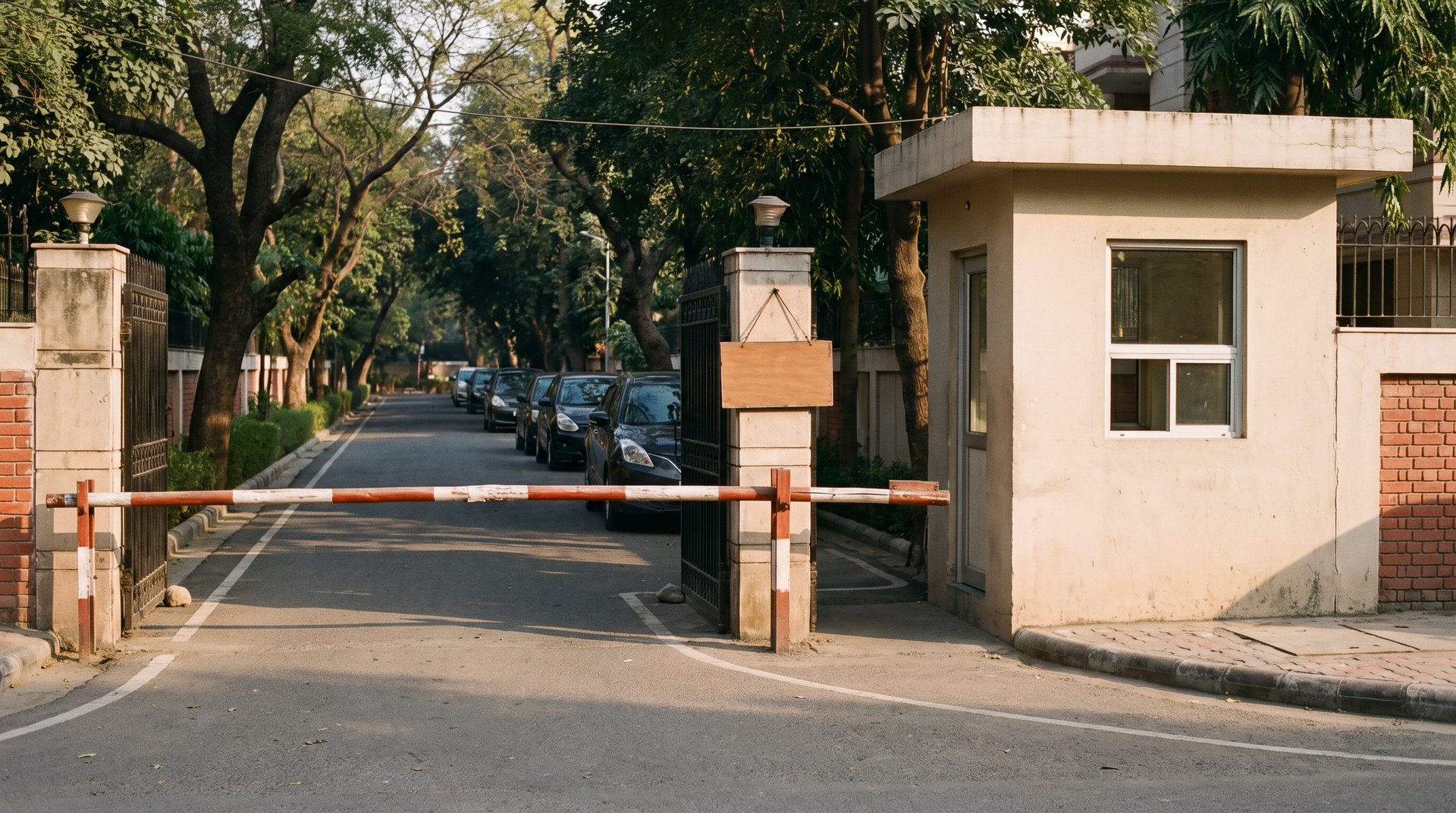
What legal power does an RWA actually have in a South Delhi colony?
Less than most residents assume, and it comes from its registration rather than from the building. RWAs in Delhi are registered under the Societies Registration Act, 1860. That makes an RWA a legal body that can sue and be sued, hold funds, run common services and enforce its own registered by-laws on its members. It does not make it a landlord, a municipality or a regulator. In practice that means an RWA generally cannot cut your water or electricity over unpaid maintenance, charge tenants more than owners for the same thing, bar your guests without a real reason, dictate who you let your floor to, or issue moral rules about how residents live. Those actions are open to challenge before the Registrar of Societies, a consumer forum or a civil court.
There is an extra wrinkle in South Delhi that explains a lot of friction. In a group-housing society, flats sit on common land under a declared apartment-ownership structure, and the association has a clear statutory footing. In a plotted colony — which is most of Greater Kailash, Defence Colony, Vasant Vihar and the rest — each floor is separately and freehold owned, and the land under it belongs to that building, not to the colony. The colony RWA is a welfare body formed by residents, not an owners’ association with a statutory charge over your property. It can do a great deal of good. It has fewer teeth than its letterhead suggests.
1860The Societies Registration Act under which Delhi RWAs are registered
Section 6The provision under which a society can sue, be sued, and be challenged by a member
₹7,500Monthly maintenance above which GST has been held to apply, on the excess only
7Minimum people who can subscribe to form a society