The tax reality: clubbing puts the income back in his return
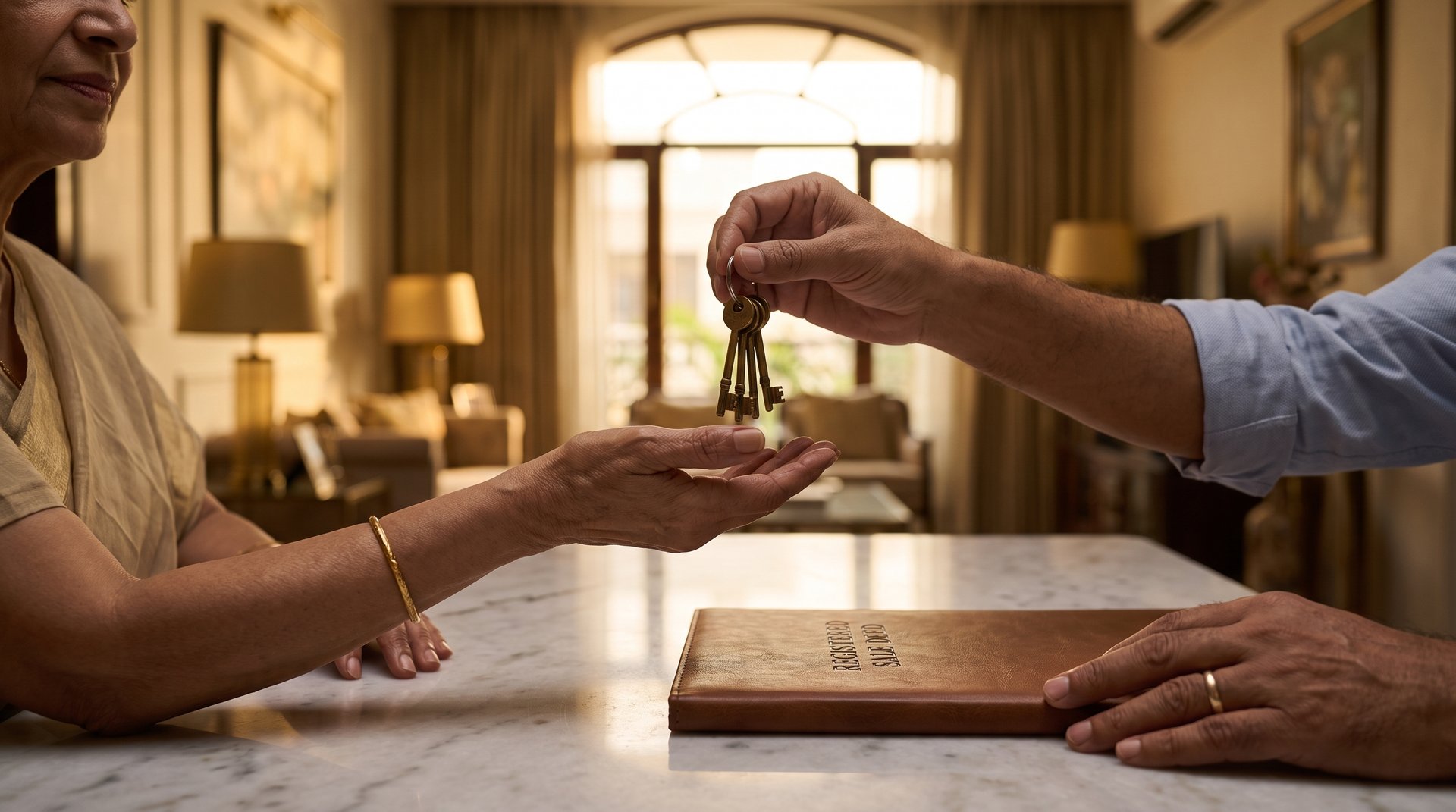
Here is the part the stamp-duty saving quietly obscures. Under the clubbing rule — Section 64(1)(iv) of the 1961 Act, now Section 99 of the Income-tax Act, 2025 — income from an asset transferred to a spouse without adequate consideration is taxed in the hands of the transferor. Gifting the purchase money and buying in her name is an indirect transfer of the asset, and the courts have treated it that way for decades. The husband is also the deemed owner for house-property purposes under old Section 27 (new Section 25). Three consequences:
Rent is his. If the floor is let, the rental income — after the 30% standard deduction and the other rules in our rental income guide — lands in the husband’s return at his slab, not hers. A wife with little other income does not get to use her lower slab on rent from a floor he paid for.
Capital gains are his. Income for clubbing includes capital gains, so when the floor is sold, the 12.5% long-term gain from our capital gains guide is computed and taxed in his hands even though the sale deed is hers. The reinvestment exemptions are available, but he is the one claiming them.
The gift itself is tax-free. A spouse is a “relative” under old Section 56(2)(x) (new Section 92), so the money he gives her is not income in her hands. Clubbing taxes the yield from the gift, never the gift.
Four ways to hold the same ₹10 crore floor — duty against tax (2026)
| Structure |
Stamp duty |
Who is taxed on rent and gains |
Best suited to |
| Wife’s name, husband’s money |
5% |
Husband, via clubbing |
Maximum duty saving on a self-occupied home where clubbing is irrelevant because there is no income to club |
| Wife’s name, wife’s own funds |
5% |
Wife, at her own slab — no clubbing |
A wife with her own earnings, savings or inheritance; the cleanest structure of the four |
| Joint names, funded in proportion |
6% |
Each on their share (old Section 26, new Section 24) |
Family homes where both want title; two-thirds of the duty saving, both names on the deed |
| Husband’s name |
8% |
Husband |
When she does not want ownership, or a loan needs to sit against his income alone |
The second row is the one families overlook. If the wife has her own income, her own savings, or an inheritance, and she pays, there is no transfer without consideration and nothing to club. She pays 5% and keeps the income at her slab. A wife who earns can also be the borrower on a builder-floor home loan in her own right, and a few lenders price women borrowers a shade lower. Where the husband is a co-borrower but not a co-owner, he repays a loan on a house he does not own and cannot claim interest on it; ownership and borrowing should line up.
Where the saving is real and where it is not
For a self-occupied family home, buying property in wife’s name is close to a free lunch: there is no rent to club, the 3% is saved outright, and the MCD rebate follows. For an investment floor bought to let, the ₹30 lakh saved at the registry is a one-off, while the rent is taxed in his return every year regardless — the structure buys nothing on income tax and should be chosen for ownership reasons, not tax ones.