Delhi Master Plan 2047: What Actually Changes in South Delhi
The DDA has approved the capital’s next master plan and sent it to the Centre. The headlines say everything changes. The gazette says nothing has — yet. Here is the honest read for builder floor buyers, plot owners and the farmhouse belt.
By the SouthDelhiFloors Research Desk Updated August 2026 9 min read
Update — 20 August 2026
Since this analysis was published, the Ministry of Housing and Urban Affairs has notified MPD-2047 in the Gazette of India (20 August 2026) — the plan is now in force, and the notified low-density text reportedly differs from the draft’s Green Development Area grades discussed below. Read the follow-up: MPD 2047 Highlights: What Became Law on 20 August.
Delhi Master Plan 2047 — what does the DDA approval actually change?
The Delhi Master Plan 2047 was approved by the DDA Authority on 12 August at a meeting chaired by Lt Governor Taranjit Singh Sandhu, and now travels to the Ministry of Housing and Urban Affairs for final approval and gazette notification — which means it is not yet law. Until that gazette appears, MPD-2021 governs every sanction, every FAR calculation and every sale in South Delhi. Nothing changes for builder floors today; the one immediate win is faster building permits after four NOCs were de-linked from the sanction process; and the biggest medium-term story is the Green Development Area policy for the Chattarpur–Sultanpur farmhouse belt.
MPD-2047 is the long-pending MPD-2041 with a new horizon — renamed to align with the Centre’s Viksit Bharat 2047 vision. Work on it began back in 2017; the draft went public in mid-2021 and drew about 33,000 objections and suggestions; and Delhi has run this entire period on MPD-2021 norms first notified in 2007. So before pricing anything into a deal, hold two facts together: the direction of travel is now clear, and the operative law has not moved an inch.
12 AugDDA Authority approval — the plan now sits with the Housing Ministry
2007The year MPD-2021 was notified — and it still governs every sanction today
23LDRA villages in the Green Development Area, including Chattarpur and Sultanpur
1,511Unauthorised colonies regularised on an as-is-where-is basis earlier this year
What Delhi Master Plan 2047 approves — and what it doesn’t
The same Authority meeting cleared four things, and they are not equal. One is a vision document awaiting the Centre; one bites immediately; two are useful signals. Here is the separation the headlines skipped:
The 12 August DDA decisions, ranked by when they actually touch the ground
Decision
What it is
When it bites
MPD-2047 approved
The full master plan — housing, mobility, regeneration, environment — sent to the Ministry of Housing and Urban Affairs for final approval and gazette notification
Only after notification; MPD-2021 governs till then
Building bye-law amendments
UBBL-2016 amended to de-link building permits from prior NOCs of the DPCC, Chief Inspector of Factories, Delhi Jal Board and the Forest Department
Near term — this is the one that speeds up real files
Old DDA two-storey redevelopment
DDA-built two-storey units in 1960s schemes get redevelopment rights on par with vacant plots, subject to conversion charges and betterment levy
On implementation; a clear pro-redevelopment signal
Narela metro depot land use
19.63 hectares re-designated for the Rithala–Kundli Red Line extension depot
North Delhi story — it adds no supply anywhere near South Delhi
The one change that bites immediately
For anyone building or booking a floor, the quiet winner of the meeting is the bye-law amendment. Four separate NOCs will no longer sit in front of a building permit, which compresses the sanction timeline on every colony rebuild. If you are weighing an under-construction booking or a collaboration deal, faster sanctions shorten the riskiest stretch of the project — the wait before work starts.
Builder floors: no new FAR, faster files, stronger scarcity
Nothing announced this week changes the plotted-colony arithmetic. The stilt + 4 formula, the FAR table, ground coverage and height norms all continue under MPD-2021 until the new plan is notified — and no change to plotted residential FAR has been signalled in the new plan’s public framing. The plot versus floor maths and the construction cost stack you would run today are the same ones you should run tomorrow.
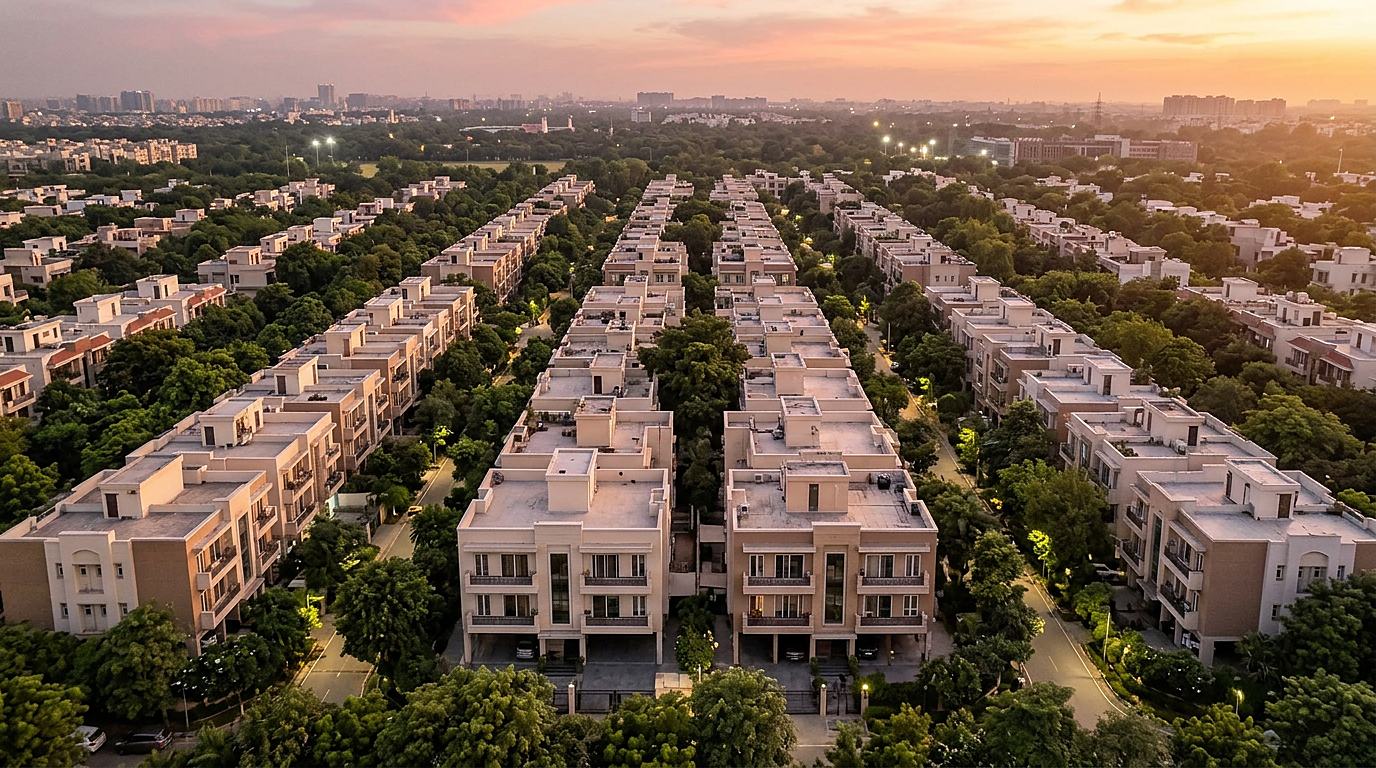
Two second-order effects are worth pricing in. First, the plan’s residential thrust is vertical and assembled — urban regeneration of pre-1970 building stock, plot amalgamation and transit-oriented development along metro corridors. That reshapes commercial edges around stations long before it touches the colony core, because amalgamating fragmented 200–500 yard plots with multiple floor owners is structurally hard, and the Lutyens Bungalow Zone stays outside higher-intensity redevelopment altogether.
Second, the growth vector points away from you. Narela, the Red Line extension, land pooling sub-cities, a proposed university hub — all of it is north and west. Not one square yard of new plotted supply lands in South Delhi under this plan. The scarcity premium that underwrites colony land is not threatened by MPD-2047; if anything, the city’s official expansion strategy just reinforced it.
One caution for builders: the draft’s transition language keeps under-construction projects on MPD-2021 norms at notification, while projects yet to start must revise plans to the new code. If the final text tweaks anything at plot level — parking, basements, structural certification — sanction timing in the months before the gazette becomes a genuine strategy question. We are watching that clause.
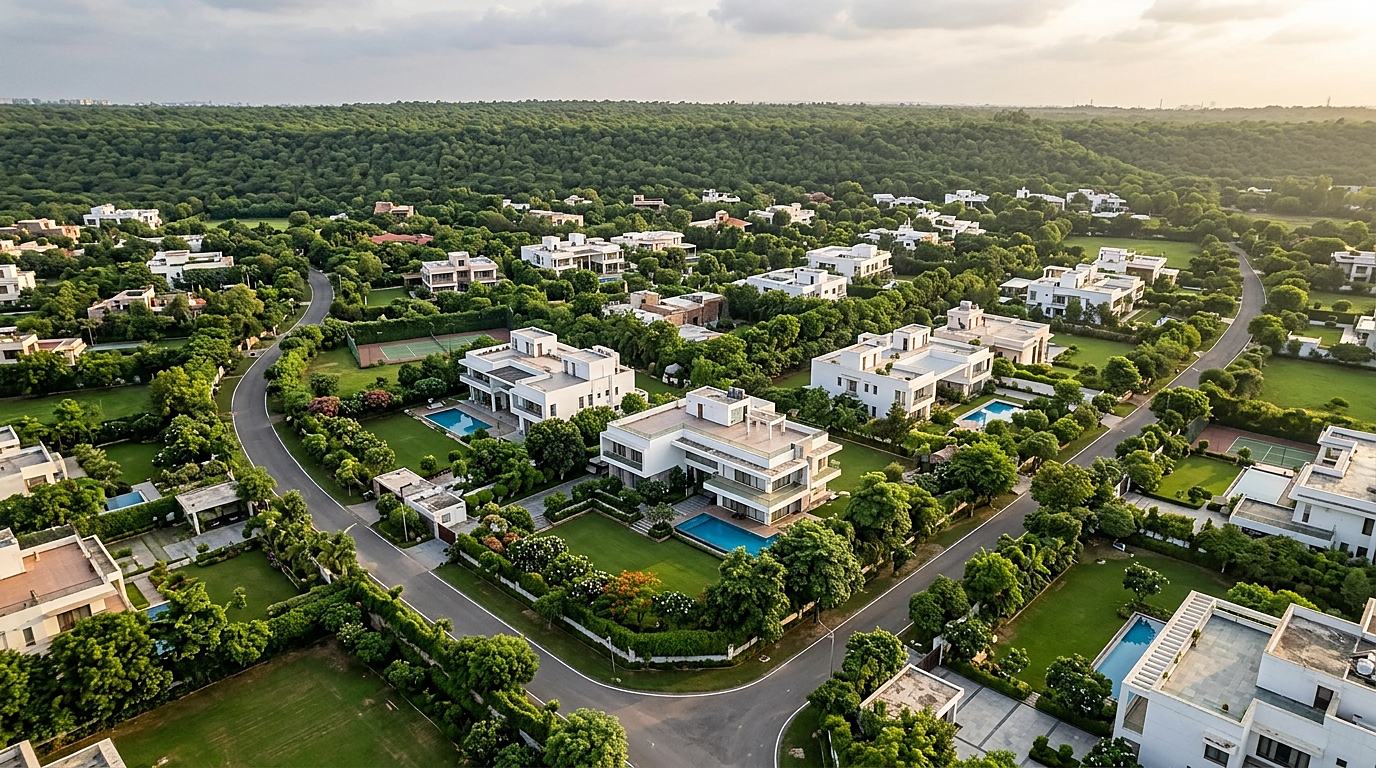
The Chattarpur–Sultanpur belt: the geography where Delhi Master Plan 2047 changes the most.
The farmhouse belt: the Green Development Area is the real story
Travelling inside MPD-2047 is the Green Development Area policy — the first modern statutory framework for Delhi’s green belt and its 23 Low Density Residential Area villages, notified as LDRA back in 2013. Chattarpur, Devli and Sultanpur are on that list, which is to say: this is precisely the farmhouse belt. The draft framework works in three grades by plot size:
The Green Development Area framework as drafted — provisional until the final text is published
Grade
Minimum plot
What it permits
Grade 1
600 sq m
Agriculture, horticulture, floriculture, solar fields and similar green uses
Grade 2
4,000 sq m (a shade under one acre)
Farmhouses, open markets, sports facilities — with a GRIHA 3-star green rating for the scheme
Grade 3
10,000 sq m (one hectare)
Educational institutions, non-polluting work centres and larger green facilities
Read that table against today’s rules and the shape of the unlock becomes clear. The current LDRA norm already requires roughly an acre for a farmhouse, with FAR of 20 — extendable to 30 against charges for an additional dwelling unit — a 12-metre height cap and half the plot kept green. The Grade 2 threshold of 4,000 sq m essentially restates the acre. So the prize is not smaller farmhouses. The prize is threefold: a clean statutory status that decades of grey-zone farmhouses never had, which changes financing, title comfort and the buyer pool; a menu of legal revenue uses on green-belt land — sport, markets, education — that lifts what an acre can earn; and, as reported, permitted FAR stepping up from five at Grade 1 to sixty at Grade 3 as parcels agglomerate, which rewards exactly the kind of land assembly the belt has resisted.
What the GDA does not do
It does not legalise anything today — the policy takes effect only with the plan’s notification. It does not touch the ridge, forest buffers or the sanctuary edge, which stay constrained regardless. And the 600 / 4,000 / 10,000 thresholds are the draft’s numbers; roughly 33,000 objections were processed after the draft went public, so treat every figure as provisional until the final text is in the public domain. Anyone selling belt land “at 2047 prices” is selling anticipation — price it as optionality, never as entitlement.
Same street, same rules — until the gazette says otherwise. Founder Mohit Minocha on reading plans against law.
“
Plans announce. Gazettes reprice. Until notification, buy on today’s rules and treat 2047 as free optionality.
Mohit MinochaFounder, SouthDelhiFloors
Colonies, regularisation and the Sainik Farms question
The bigger unauthorised-colony event actually happened months before this approval: in April, the Centre announced regularisation of 1,511 unauthorised colonies on an as-is-where-is basis — existing structures recognised, land use of plots treated as residential, no approved layout plans required, and future construction to follow municipal norms. MPD-2047 now supplies the planning wrapper around that decision.
The open question that matters most to the South Delhi luxury market is the affluent-colony track. Sixty-nine colonies classed as affluent — Sainik Farms the best known, most of them in the South Delhi belt — were kept out of the earlier ownership-rights scheme and handled separately. The state has signalled intent to resolve Sainik Farms, and the matter has run through the courts for years, but we could not find a final order placing it inside the regularised list. Until that order exists, treat Sainik Farms as what it is: enormous optionality, unresolved. If it lands, it is arguably the single largest repricing event available in South Delhi residential — hundreds of acres of built luxury stock moving from unfinanceable to bankable.
What buyers and owners should do now
Buyers: transact on today’s law
Every sanction, circle-rate computation and all-in cost runs on MPD-2021 until the gazette. A colony purchase decided by fundamentals — block, land share, title — needs no 2047 assumption to work.
Belt landowners: hold the optionality
In Chattarpur, Sultanpur and Devli, notification carries positive expected value and costs nothing to wait for. Distress-selling grey-status land months before its first statutory framework is the worst-timed exit in a decade.
Builders: bank the faster sanctions, watch the transition clause
The NOC de-linking shortens every project’s front end now. If the final text touches plot-level norms, getting sanctions in before the gazette becomes a real timing decision — plan the pipeline with that in mind.
Everyone: watch four dates, ignore the noise
The MoHUA gazette, the final GDA text, a Sainik Farms order, and the regeneration regulations that follow notification. Those four events change prices. Approval headlines do not.
Key takeaways
Delhi Master Plan 2047 is approved by the DDA, not notified — it now needs the Housing Ministry’s final approval and a gazette; MPD-2021 remains the operative law for every deal.
Builder floor rules are unchanged: no new plotted FAR has been signalled, while the bye-law amendment de-linking four NOCs speeds up sanctions on new floors.
The Green Development Area covers the 23-village LDRA belt — Chattarpur, Devli, Sultanpur included — with draft thresholds of 600 / 4,000 / 10,000 sq m; the unlock is legality, financing and permitted uses, not smaller plots.
1,511 unauthorised colonies were regularised as-is-where-is earlier this year; the 69 affluent colonies, Sainik Farms included, remain a separate, unresolved track.
The plan’s growth vector points north and west — it adds zero supply in South Delhi, reinforcing the colony scarcity premium rather than diluting it.
Frequently asked questions
Is the Delhi Master Plan 2047 in force now?
No. The DDA Authority approved it and sent it to the Ministry of Housing and Urban Affairs for final approval and gazette notification. Until that gazette is published, MPD-2021 — notified in 2007 — remains the law that governs sanctions, FAR and land use across Delhi.
Does MPD-2047 change builder floor or FAR rules in South Delhi?
Nothing announced changes plotted-colony norms — stilt + 4, FAR, ground coverage and height continue under MPD-2021. The real near-term change is procedural: building permits no longer wait on four separate NOCs, which shortens sanction timelines for new floors.
What is the Green Development Area policy?
A framework inside the new plan for Delhi’s green belt and its 23 Low Density Residential Area villages. As drafted, it permits green uses from 600 sq m, farmhouses and sports facilities from 4,000 sq m, and institutions or non-polluting work centres from 10,000 sq m, with green-rating and access-road conditions attached.
Can I build a farmhouse on less than an acre now?
No. The operative LDRA norm still requires roughly one acre with FAR 20–30, and the GDA’s draft farmhouse threshold of 4,000 sq m is essentially the same size. Nothing on plot size changes until the plan is notified, and the final figures may differ from the draft.
Which farmhouse areas does the new policy cover?
The 23 LDRA villages — Chattarpur, Devli and Sultanpur among them — plus dozens of green-belt villages on Delhi’s periphery. Ridge land, forest buffers and sanctuary edges stay excluded regardless of the policy.
Is Sainik Farms regularised?
Not conclusively. The 1,511 colonies regularised earlier this year were those outside the exclusion criteria; the 69 affluent colonies, Sainik Farms included, sit on a separate track. Intent to resolve it has been signalled, but we have seen no final order — treat it as unresolved.
Should I wait for MPD-2047 before buying in South Delhi?
No purchase that works on today’s fundamentals needs the new plan to succeed, and no purchase that only works if 2047 provisions arrive on time is safe. Buy on current rules, clean title and the block — and treat the plan’s upside as a free option.
When will the plan actually be notified?
There is no official date. It needs the Housing Ministry’s approval and a gazette notification, after which zonal plans and implementing regulations follow. This plan’s own history — drafted in 2021, approved in 2026 — argues for patience over prediction.
Own land in the belt, or eyeing a colony floor?
Tell us what you hold or what you’re hunting — we’ll read your exact position against today’s rules and the new plan’s direction, before you buy, sell or sit tight.
SouthDelhiFloors is a property advisory. Planning positions change with notification — verify before committing funds.
This analysis reflects public information as of August 2026: the DDA Authority’s approval of MPD-2047 and bye-law amendments on 12 August, the Green Development Area framework as drafted, current LDRA development controls, and the April regularisation of 1,511 unauthorised colonies. The final plan text is not yet published and all draft-based provisions are provisional. Verify current norms at dda.gov.in and take legal advice before transacting.