Property in Greater Kailash 1 in 2026 trades at roughly ₹35,000–40,000 per square foot for new builder floors and around ₹10 lakh per square yard for land, making a typical 3/4 BHK floor ₹8–17 crore. GK-1 is a Category B colony whose prices rose among the fastest in South Delhi over the past year.

If South Delhi real estate had a stock exchange, Greater Kailash 1 would be its index. The colony is large enough to always have inventory, prestigious enough to hold value through every cycle, and liquid enough that a fairly priced floor rarely waits long for a buyer. When people outside Delhi picture “a South Delhi home”, they are usually picturing GK.

The past eighteen months turned that steady index into a growth stock. New builder floors in GK-1 are trading around ₹32,000–35,000 per square foot in mid-2026, with land changing hands near ₹10 lakh per square yard — and this segment posted some of the fastest appreciation in the city’s Q1 2026 numbers, as Category B colonies grew 23–32% year on year. This guide covers the colony block by block: what things cost, where the value sits, and what to check before you commit crores to an address here.

A Short History, Because It Explains the Present

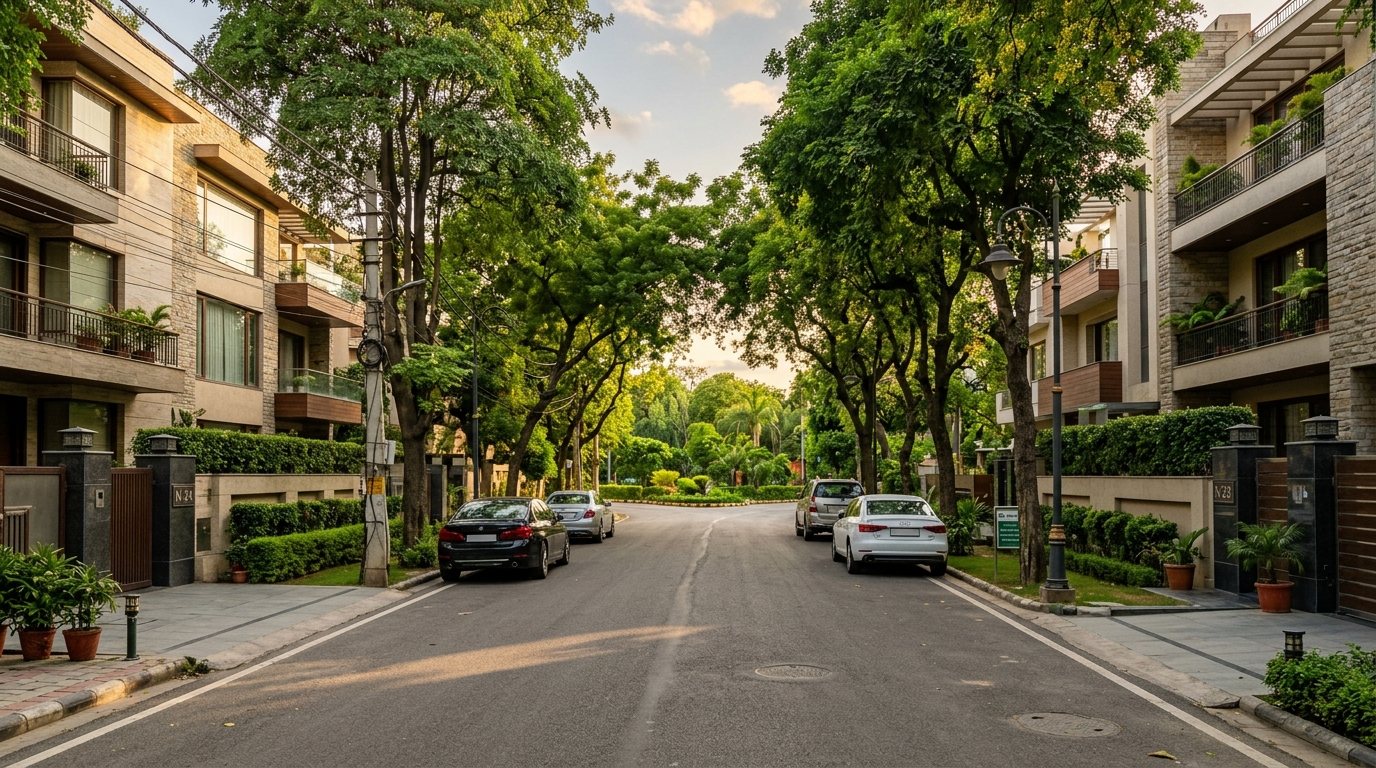
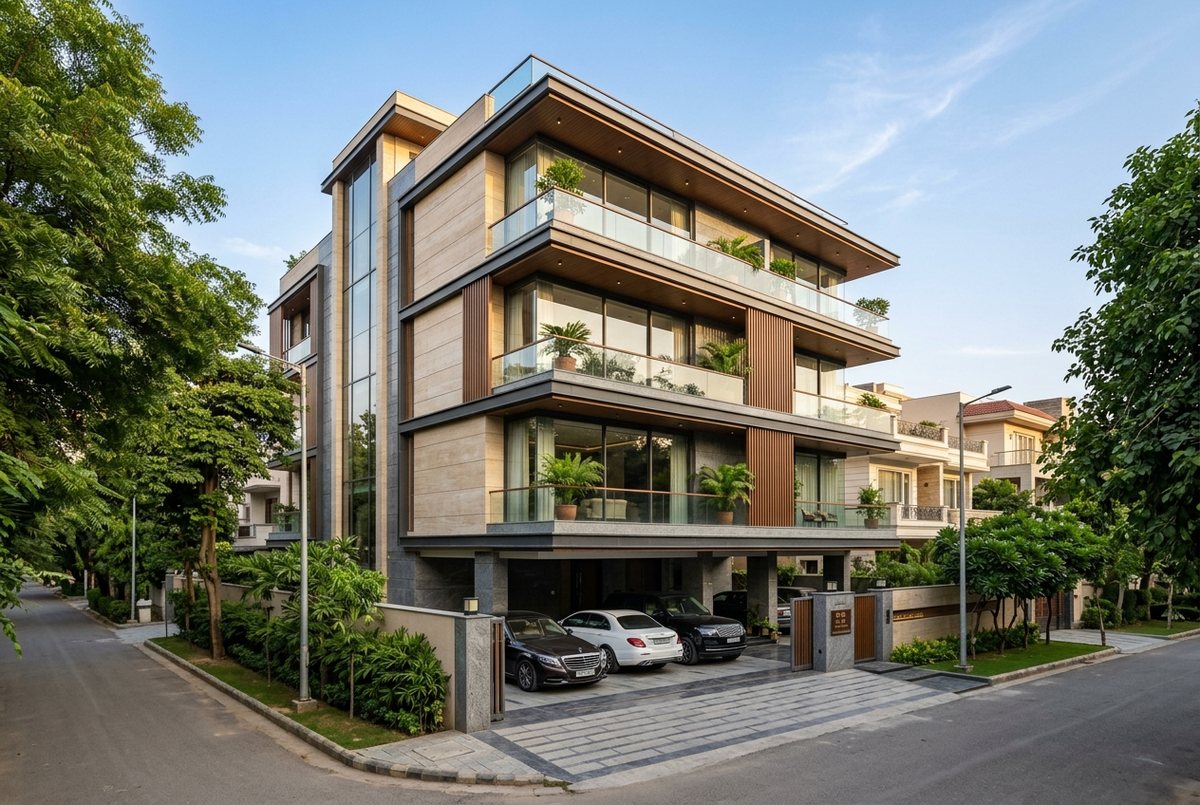
Greater Kailash was developed by DLF in the late 1950s and 1960s as one of Delhi’s first large private plotted colonies, laid out with internal parks, wide-for-their-era roads and two purpose-built markets. The original allottees built single-family kothis on plots of roughly 200 to 500 square yards. Sixty years on, those kothis are the raw material of the current market: one by one they are being redeveloped into stilt-plus-four buildings of independent floors, which is where nearly all new GK-1 supply comes from. Understanding this cycle — old kothi in, four new floors out — is understanding GK.

GK-1 by the Numbers (Mid-2026)

Plot size Typical new 3/4 BHK floor Indicative price
200–250 sq yd ~1,800–2,700 sq ft ₹6–8 Cr
300 sq yd ~2,400–2,700 sq ft ₹9–13 Cr
400 sq yd ~3,200–3,600 sq ft ₹13–16 Cr
500 sq yd ~4,000–4,500 sq ft ₹16–20+ Cr

Resale floors five to fifteen years old typically trade 15–25% below these levels. Park-facing positions, corner plots and top floors with exclusive terrace rights carry premiums of 5–15% each; basements sold with ground floors as duplexes price the bundle well above a standard floor. All figures are indicative transaction levels, not asking prices — asking prices in GK run 8–12% above where deals actually close.

SouthDelhiFloors insight: In GK-1 the spread between a well-bought and a badly bought floor of identical size is routinely ₹1–1.5 crore. The variables are always the same three: block, plot position, and whether the buyer negotiated against real comparable transactions or against the broker’s asking sheet.

The Blocks, Honestly Described

GK-1’s residential blocks — A, B, C, D, E, N, R, S and W among the principal ones — share the same circle-rate category but do not live or price identically.

  • C Block: Consistently among the most sought-after — good plot sizes, internal parks and quick access to both markets. Pays a premium and earns it on resale.
  • R,E and S Blocks: The colony’s quiet middle, with strong park frontage in pockets. Often the best value-for-position purchases in GK-1.
  • W Block: Larger plots on the colony’s edge towards Savitri; excellent for buyers prioritising space.
  • N Block: Convenience buyers’ favourite for walkability to N-Block Market; the trade-off is more evening activity on the approach lanes.
  • A through D Blocks: Solid, established, closest to the Zamrudpur side in parts — inspect the specific lane, as street width and parking pressure vary house to house.

The rule that outranks every block generalisation: judge the specific street. A wide, park-facing lane in an average block beats a congested corner of a famous one.

New Build or Resale in GK-1?

New floors carry the ₹32,000–35,000 rate and everything current buyers want — lifts, backup, three-side-open designs, fresh waterproofing. Resale floors from the 2010–2020 vintage trade meaningfully lower and often sit on better plots, because the best positions were redeveloped first. Our working rule: on a five-year horizon, a structurally sound resale floor on a superior plot beats a new floor on an average one, since the land does the appreciating; on a fifteen-year horizon, or if you dread renovation, buy new. Either way, price the gap properly — a resale floor offered within 10% of new-build rates is asking you to pay for someone else’s depreciation.

Living in GK-1

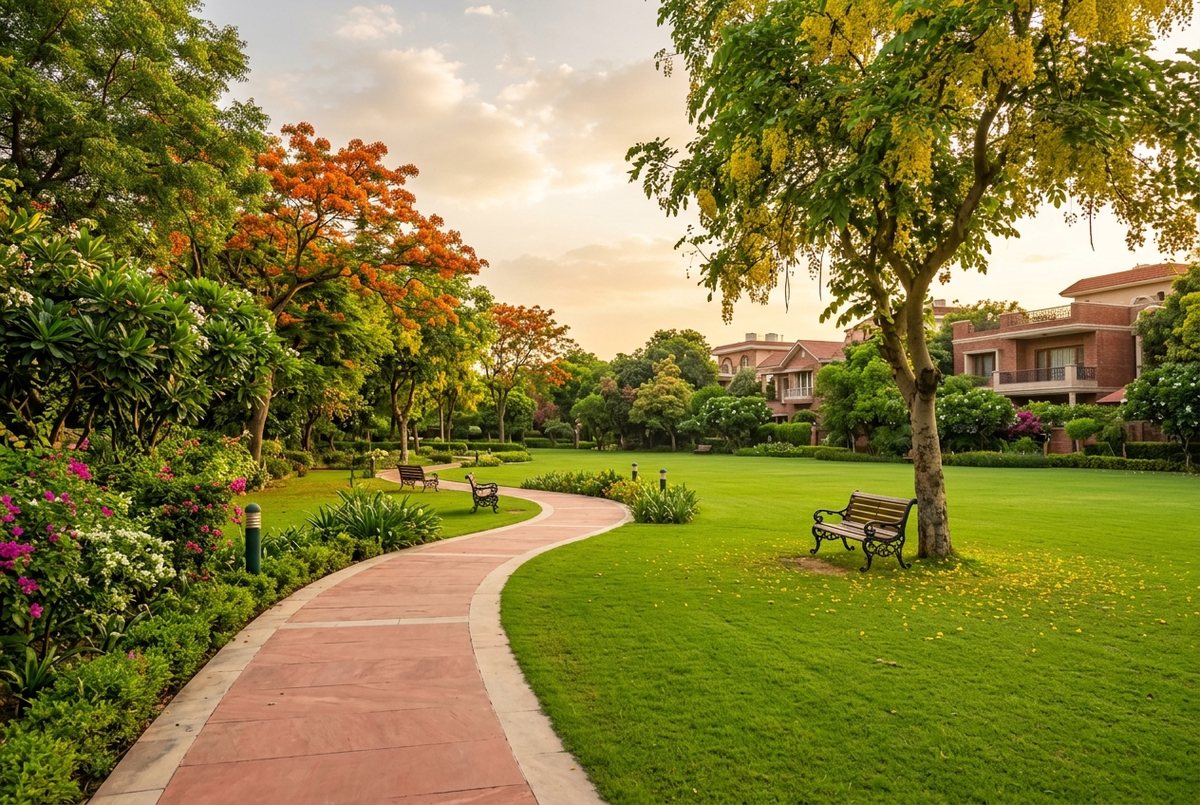
The colony’s everyday infrastructure is the real moat. M-Block Market is among the best colony markets in India — flagship retail, restaurants, cafés, banks and services in a walkable square. N-Block Market covers the daily needs with its own dining cluster. Internal parks anchor most blocks, and the colony’s RWAs are active on security and gating.

Connectivity is genuinely strong: the Greater Kailash station on the Magenta Line sits at the colony’s doorstep, Kailash Colony station on the Violet Line serves the northern side, and the Outer Ring Road puts AIIMS, Nehru Place and the airport corridor within predictable reach. Moolchand and Fortis CG Road are the nearby hospital anchors, with Max Saket fifteen minutes out. Schools across the GK–East of Kailash–Alaknanda arc — Summer Fields in Kailash Colony, Bluebells, DPS Mathura Road a straight drive up — keep most school runs under twenty minutes.

The Rental Market

GK-1 is one of South Delhi’s strongest rental micro-markets. New 4 BHK floors let for roughly ₹2.5–4.5 lakh per month depending on size and finish, with corporate leases and diplomats supplementing the family-tenant base. Gross yields of around 2–3% will not excite a spreadsheet, but the tenant quality, low vacancy and the land-led capital appreciation underneath are what investors actually buy here. Rented floors also resell without difficulty — the market is deep enough that sitting tenants rarely obstruct a sale.

What a GK-1 Transaction Actually Looks Like

The rhythm of a deal here is fairly standard once terms are agreed. A token — customarily ₹11 to ₹51 lakh depending on ticket size — holds the property while lawyers exchange title documents; the agreement to sell follows within two to four weeks, typically against 10–25% of the price, fixing a registration date sixty to ninety days out. The balance moves at registration, most of it by banker’s cheque or RTGS on the day, with the buyer’s 1% TDS deposited against the seller’s PAN before funds transfer. From handshake to registered deed, six to ten weeks is normal; loan-funded purchases sit at the longer end while the bank completes its legal and valuation checks.

Two GK-specific rhythms are worth knowing. Sellers here rarely hold to formal asking-price paper — pricing settles by negotiation against recent transactions in the same block, which is where a broker’s live comparables earn their fee. And possession nuances matter: floors are frequently sold with tenants in place or with the seller needing sixty days to vacate. Write the possession date and per-day delay compensation into the agreement rather than relying on goodwill.

Buying in GK-1: What to Verify

Beyond the standard South Delhi diligence — thirty-year title chain, registered sale deed only, no GPA transactions — GK-specific points deserve attention:

  • Land share in the deed. On a four-floor building your undivided share should be about 25% of the plot; on GK land values that share is most of what you are paying for.
  • Sanctioned plan versus construction. Fourth floors and stilts are permitted under current bye-laws, but verify the plan for the specific building; deviations become the buyer’s liability.
  • Terrace rights. Top-floor premiums are only justified when exclusive terrace rights are written into the sale deed.
  • Collaboration paperwork. Much of GK’s new stock comes via owner–builder collaborations; confirm the registered collaboration agreement and that the correct party is signing your deed.
  • Basement status. Basements are legal for parking, storage and services; habitable use needs specific sanction. Price a “basement bedroom” accordingly.
  • Parking allocation. Named stilt slots in the deed. GK’s lanes are unforgiving to the floor that has cars but no slots.
  • Transaction costs. On a ₹12 crore purchase, stamp duty runs ₹48–72 lakh depending on whether registration is in a female or male family member’s name, plus 1% registration fee and 1% TDS to be deducted and deposited by the buyer.

GK-1 or GK-2?

Buyers ask us this weekly. The honest answer: they are siblings, not rivals. GK-2 offers a very similar product, its own M-Block market and pockets of larger plots; GK-1 has the edge in market vibrancy, metro proximity on the Magenta Line side and overall liquidity. Pricing runs closely parallel, with GK-1 fractionally ahead on comparable floors. If a specific floor in GK-2 fits your brief better than anything available in GK-1 that week, take the floor — the colony-level difference is smaller than the plot-level one.

Where GK-1 Goes From Here

Three forces support the medium-term case. First, redevelopment has years to run: a majority of the colony’s original structures are past fifty and will cycle into new floors. Second, the metro network around the colony keeps improving, with the Golden Line interchange at Saket adding another southern link. Third, the buyer pool keeps widening — Q1 2026 saw NRI and fund capital moving into exactly this category of colony. None of this guarantees any particular year’s return, and prices that rose 25–32% in a year can also pause. But scarcity of land, depth of demand and the quality of daily life here are structural, and structural is what you want under a nine-figure asset.

Frequently Asked Questions

What is the price per square foot in Greater Kailash 1 in 2026?

New builder floors trade around ₹35,000–40,000 per square foot in mid-2026; resale floors run 15–25% lower depending on age and condition. Land is transacting near ₹10 lakh per square yard.

How much does a 4 BHK builder floor cost in GK-1?

Typically ₹9–16 crore for new construction on 300–400 square yard plots, ranging down to about ₹8 crore on smaller plots and past ₹20 crore on 500 square yard plots with premium positions.

Which is the best block in GK-1?

C Block usually tops buyer preference for its parks and market access, with R,E and S Blocks offering the best quiet-value combination. In practice, the specific lane and plot position matter more than the block letter.

Is GK-1 a Category A or Category B colony?

Category B under Delhi’s circle-rate classification. Notably, B-category colonies including GK outpaced Category A addresses in the 2025–26 appreciation cycle.

What rent does a GK-1 floor earn?

New 4 BHK floors typically let for ₹2.5–4.5 lakh per month. Gross yields sit around 2–3%, with the investment case resting mainly on land-led capital appreciation.

Is GK-1 well connected by metro?

Yes — Greater Kailash station (Magenta Line) borders the colony and Kailash Colony station (Violet Line) serves the northern side, with the Outer Ring Road handling road connectivity.

Are basements in GK-1 legal to live in?

Basements are sanctioned for parking, storage and services; habitable use requires specific approval. Verify the sanctioned plan before paying for a basement marketed as a bedroom or office.

GK-1 vs Defence Colony — which should I choose?

Both are B-category benchmarks with similar pricing. Defence Colony offers a more central position and a celebrated restaurant market; GK-1 offers larger overall inventory, two markets and stronger liquidity. Choose by the specific floor available, not the label.

What extra costs apply when buying in GK-1?

Stamp duty of 4–6% (female/male registration), 1% registration fee, 1% TDS on the consideration, plus legal and brokerage costs — budget 5–7.5% over the agreed price.

Is 2026 a good time to buy in GK-1?

Prices have run hard, so bargains are rare; but supply remains structurally scarce and demand deep. Buy for a five-year-plus horizon, negotiate against actual comparable transactions, and prioritise plot position — that discipline works in any year.

Key Takeaways

  • GK-1 in 2026: roughly ₹35,000–40,000 per sq ft for new floors, land near ₹10 lakh per sq yd, 4 BHKs at ₹9–16 crore.
  • The colony led the current appreciation cycle as B-category addresses outpaced Category A.
  • C Block leads preference; R,E and S offer value; the specific street outranks every block generalisation.
  • Verify land share, terrace rights, sanctioned plans and collaboration paperwork before signing anything.
  • Yields are 2–3%; the real return is the land under the floor.

Talk to SouthDelhiFloors

We hold live inventory across GK-1’s blocks at any given time — tell us your size and budget and we will line up viewings this week, block by block.

Call / WhatsApp: +91 99990 04511 · Email: contact@southdelhifloors.com
Defence Colony–based consultants · Four decades in South Delhi real estate

Explore Further